This movie is like a warm cup of tea on a chilly winter evening. By the end, it leaves you feeling cozy and content. It’s a really good film!
Scribbles
A collection of raw, honest, and often imperfect thoughts, ideas, and reflections.
Newsletter
Hit that subscribe button to keep up with my journey. I send you updates now and then, no spam!
Follow on social media

Geeky Steth
@blog@geekysteth.com
Personal blog Medicine, Tech, Productivity and Movies.
28 posts
2 followers
-
Bangalore Days: A film that feels like a hug.
 No comments on Bangalore Days: A film that feels like a hug.
 -
My first film of 2026 – Aaromaley

Plot of the movie
Letterboxd describes the movie as:
Ajith, a romantic dreamer faces reality when forced to work at a matchmaking agency under Anjali, a pragmatic, grounded woman, devoid of dreamy illusions. Their conflicting ideologies become the foundation of a relationship that’s as charming as it is unfiltered.
My review of Aaromaley
First movie of 2026! I have a soft spot and a low threshold for romcoms. I ended up liking this one. It’s not perfect and there are definitely flaws. The writing, especially after the fallout between the lead pair, could have been stronger. Her backstory deserved more depth, and the friendship between the lead and Sachin had so much potential that was left unexplored. Overall, the writing feels a bit superficial.
That said, in today’s Indian movie landscape, where most films are either chasing the next Pushpa or Salaar, or delivering cringy romcoms like Telusu Kada – this film felt like a breath of fresh air. Imperfect, but enjoyable nonetheless.
It is available on JioHotstar to stream in India and Hulu elsewhere. Happy New Year everyone!
-
JetPens is incredibly cool and my new favorite stationery website

I stumbled across JetPens a few weeks ago while trying to find out more about the Hobonichi Techo and the Kokuyo Jibun Techo planners. I was deep in planner research mode (you know how it is when you’re hunting for the perfect planning system), and honestly, JetPens is amazing. It’s unfortunate that this website isn’t available to buy stuff from in India. However, it still offers practical and valuable information that you might not find anywhere else.
Here’s what blew my mind. I clicked on their comparison guide between the Hobonichi and Jibun Techo, and it was more detailed than anything I could find on the official planner websites. They had grid measurements, paper weight comparisons, photos of the actual layouts, everything. It’s wild that a retailer would put in more effort than the manufacturers themselves.
What makes JetPens special is how much information they pack into every product page. They’re a store, yes, but more importantly, it feels like a trustworthy source of information. You know when you’re trying to find a specific pen with a 0.25mm needle point tip in archival quality blue ink? Most websites would make you click through a hundred products. JetPens has filters for literally everything. They’ve documented specifications for over 10,000 products so you can actually find what you want.

The guides are incredible, too. They create handwriting samples, water-resistance tests for fountain pen inks, and videos showing how each pen writes. I spent way too much time watching their YouTube videos about different paper types. It’s the kind of content that makes you realize how much thought goes into quality stationery.

And the selection! Japanese stationery, Korean brands, European pens, washi tape, planners, and notebooks with Tomoe River paper. The whole vibe of the site just feels right. It’s clean, organized, and made by people who actually care about pens and paper. They test everything before adding it to their catalog. The team is fountain pen users, artists, and writers themselves, so when they recommend something, you know it’s because they’ve actually used it.
I wish we had something like this in India. Being a stationery lover here means either settling for whatever’s available locally or ordering internationally and dealing with shipping costs and customs. JetPens only ships within the USA (free shipping over $35), so I’m stuck admiring from afar for now.
But honestly? Even just browsing the site makes me happy. That feeling when you discover a website that completely gets your obsession with the perfect pen, the right grid size, and the smoothest paper. For anyone who gets excited about new stationery releases every week, this is your place.
If you’re into planners, pens, or paper, check out JetPens.com. Just a fair warning, you might lose a few hours exploring their comparison tools and guides. Worth it though.
-
India and Calculus – Numberphile Video
I recently stumbled upon a fascinating video by Numberphile that I believe everyone interested in mathematics should watch. This video is not only informative but also delves into the often-overlooked history of calculus especially it’s relation with India.
The video explores the remarkable contributions of the Kerala school of mathematics in India. These contributions significantly predated the work of renowned mathematicians, Isaac Newton and Gottfried Wilhelm Leibniz. This insight into the Kerala school sheds light on the global roots of calculus. It challenges the traditional narrative that often centers solely on Western mathematicians.
Key Aspects Discussed
The video touches on several key points, including:
- The development of infinite series and calculus concepts by Indian mathematicians.
- Reasons that hampered its global recognition: Written in Malayalam language (non-Sanskrit) and Portuguese colonization at that time.
- The historical context and how these advancements laid the groundwork for future work in mathematics.
- A comparison of the methodologies used by the Kerala school and those of Newton and Leibniz.
-
The Meerut “Doctor used Glue” Story Is Going Viral – Here’s Why I’m Holding Off on Outrage
I came across a post my X.com feed with the claim: “Doctor in Meerut used Glue on a child’s face.” Naturally, people were furious. The post made it sound like a doctor casually sealed a child’s wound with hardware-store glue instead of stitching it.
Before joining the outrage, I paused because something important was missing.
The entire discussion revolves around one word: “glue.”
But nobody seems interested in the obvious question: What kind of glue?Medical-grade tissue adhesives are very common and often the preferred option for small, clean facial cuts in children. Emergency medicine, pediatrics, and plastic surgery guidelines across the world support their use. They’re quick, less painful than stitches, give excellent cosmetic results, and avoid the trauma of suture removal.
So when a viral post dramatically announces “the doctor used glue,” without clarifying the type, it becomes misleading by omission. It’s a bit like saying “the doctor gave the child a drug” without mentioning it was just paracetamol.
Two things about the viral claim stood out to me:
- No essential details.
- Missing medical context.
Presenting “glue” as inherently harmful ignores the fact that surgical glue is a recognized, safe, guideline-supported option. Without context, it only fuels anxiety and decreases the trust of the society in modern medicine and it’s practitioners.
If it eventually turns out that non-medical glue was used, that’s unquestionably wrong and deserves accountability. But if the doctor used approved tissue adhesive and the word “glue” triggered panic, then we may be misjudging the situation entirely.
-
Why is it important to restrict blue light before sleep?
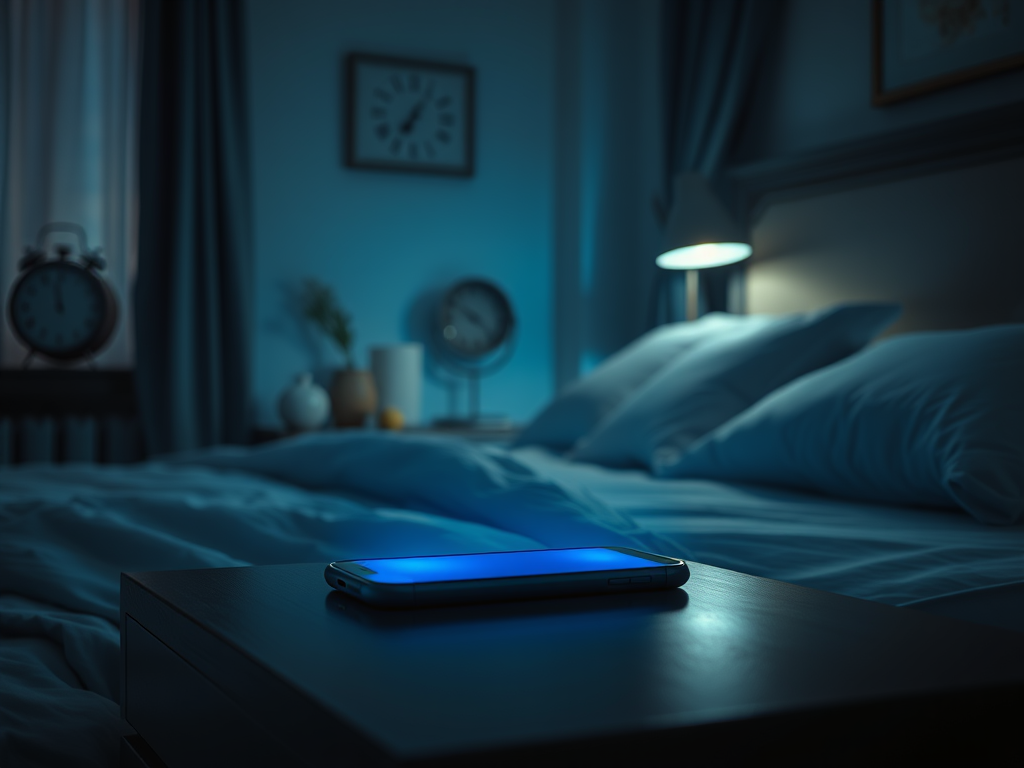
I am always on the lookout for ways to improve myself. Avoiding smartphone use and blue light exposure before going to sleep has been on my radar for quite some time. However, I haven’t been able to commit to it. Until now, I haven’t really reflected on why this is the case. In other words, I had not given it much thought. This blog post is my reflection on this issue. First, I want to explore the benefits of cutting down on smartphone use before bedtime.
Table of Contents
Physiological basis for poor sleep after blue light exposure.
Our eyes contain intrinsically photosensitive retinal ganglion cells (ipRGCs), which represent only a fraction of all ganglion cells (approximately 1-2%) but play a crucial role in regulating sleep. These cells contain a photopigment called melanopsin, a photopigment with peak sensitivity to blue light wavelengths (460-480 nm). These receptors don’t contribute much to what we see, but they act as environment irradiance detectors that monitor light levels.
These ipRGCs project directly to the suprachiasmatic nucleus (SCN) in the hypothalamus, which acts as the body’s circadian clock. When we look at screens right before we sleep, our SCN gets false signals from ipRGCs indicating it’s still daytime, creating confusion in our body’s natural circadian rhythm.
A study indicated that a 2-hour exposure to blue light before sleep has reduced the melatonin level significantly compared to participants without exposure1. A Harvard study has shown that blue light suppressed melatonin for about twice as long as the green light. It shifted the circadian rhythm by twice as much.2
What are the effects on our physiology and body?
- Delayed sleep onset.
- Reduced sleep duration and quality. A norwegian study found that 1 hour of screen time at bedtime resulted in 24 fewer minutes of sleep and a 59% higher risk of insomnia.3
- Disruption of sleep architecture, particularly effecting deep and REM stages of sleep.
- Circadian rhythm shifting – a phenomenon called phase delay.
- Broader responses such as hormone dysregulation, metabolic consequences, and increased stress response.
Reflections on my habit.
I have had this habit for a while now. I have tried to cut down on this, but I have been unsuccessful. I have never really reflected on the reasons behind it. Now, as I think about it, a few reasons come to my mind.
- It has become a habit for me, and breaking habits is difficult.
- What I do is not productive, more often than not, I find myself scrolling through reels and x feed (which has become a racist cesspool)
- At that point in the day, my energy is low. I don’t feel like doing productive things like reading a book or studying. So I end up lounging and mindlessly scrolling through social media.
Actions to break from this habit.
- Try to include a non-visual activity before bed, such as listening to a podcast, audiobook, or just music. I think this is something doable.
- Make use of Apple’s sleep features by turning on Night Mode. I have an Apple Watch, so I plan to check if cutting down on blue light produces tangible results, such as improvements in sleep architecture and duration.
- Journal the subjective feelings you encounter upon waking the next day. Make sure to acknowledge the feelings of being productive and congratulate yourself on a job well done.
- Set a time-out period of 2-3 hours before sleep during which blue light exposure should be reduced. However, keep in mind that this rigid timeframe has not worked well for me in the past.
I need to incorporate these things into my life and see if I can break away from the habit. Paying attention to how and why I feel in a specific way is important to break away from this habit.
-
My Favorite Word: Homeostasis – The Symphony of Balance
Tags: scienceWhat’s your favorite word?
There are countless words that I come across every day in the world of medicine and science and life in general, but one that always sticks with me is “homeostasis.” It may sound like something straight out of a medicine textbook (which it is), but for me, it represents something far deeper: balance, harmony, and the essence of life itself.
Why Homeostasis?
Homeostasis refers to the body’s ability to maintain a stable internal environment despite changes in the external world. Whether it’s regulating body temperature, balancing pH levels, or keeping blood glucose in check, homeostasis is the process ensuring that all systems function as they should.
What’s fascinating about homeostasis is its sheer complexity. Every organ and system in your body is involved in this delicate balance. From to adjusting blood pressure, to the kidneys fine-tuning electrolyte levels, it’s as if your body has its own internal orchestra. And each player must hit the right note for you to just breathe.
A Symphony of Systems
The human body is like an incredibly complex machine, or even better, a self-sustaining ecosystem. Imagine it as a perfectly tuned algorithm, where every input—whether it’s the food you eat, the air you breathe, or the stress you experience—affects an output. In a way, it’s like a perfectly coded program designed to fix bugs in real-time before they cause the system to crash.
Take for instance the feedback loops that regulate hormone levels. The hypothalamus, pituitary gland, and thyroid work together like components in an interlinked network, sending signals back and forth to maintain equilibrium. One imbalance, like in hyperthyroidism, can throw everything off.
Homeostasis in the World Around Us
What makes homeostasis even more interesting is that it isn’t just a concept restricted to medicine. In economics, markets strive for equilibrium, where supply meets demand. In physics, systems tend toward thermodynamic equilibrium. Even in nature, ecosystems rely on balance—predators and prey, oxygen and carbon dioxide levels, and nutrient cycles. The idea of homeostasis reflects the universal need for equilibrium, no matter the system.
Think about climate change—essentially a loss of environmental homeostasis. The imbalance caused by excess greenhouse gases disrupts the stable temperatures our ecosystems have relied on for centuries. It’s a reminder that homeostasis is everywhere, not just in our bodies but in the world we interact with daily.
Homeostasis: Philosophy
On a more personal level, homeostasis is a reminder that life is all about balance. Just as the body needs equilibrium, so does your mental and physical health. Too much focus on one thing—whether it’s work, studying, or even leisure—can throw your entire well-being off-kilter.
For example, consider burnout among medical professionals. It’s a prime example of mental homeostasis gone awry. When stress, fatigue, and overwork start to overwhelm the body’s natural balance, the consequences can be severe, both mentally and physically.
For someone passionate about medicine, the word “homeostasis” represents the pinnacle of intricate design. From stabilizing a trauma patient’s vital signs to managing chronic conditions like diabetes, every medical decision that I saw my seniors and residents take make revolves around maintaining or restoring homeostasis.
It also has broader implications for healthcare systems themselves. Public health efforts, from vaccination programs to lifestyle interventions, aim to restore balance at a population level. Take the global response to the COVID-19 pandemic: efforts like social distancing, vaccination, and treatment strategies all were intended and aimed to return society to its “normal” state, akin to how a body strives for physiological homeostasis in the face of a virus.
Final Thoughts
Homeostasis is more than just a scientific term—it’s a philosophy. It serves as a reminder of how interconnected every part of life is. From the microscopic processes inside your cells to the environmental balance of ecosystems, the need for equilibrium is universal.
So yes, “homeostasis” may be my favorite word, not just because it’s foundational to medicine, but because it symbolizes something far greater: restoring balance.